School Success Stories
Durham Academy’s Exemplary Sustainability Action Plan
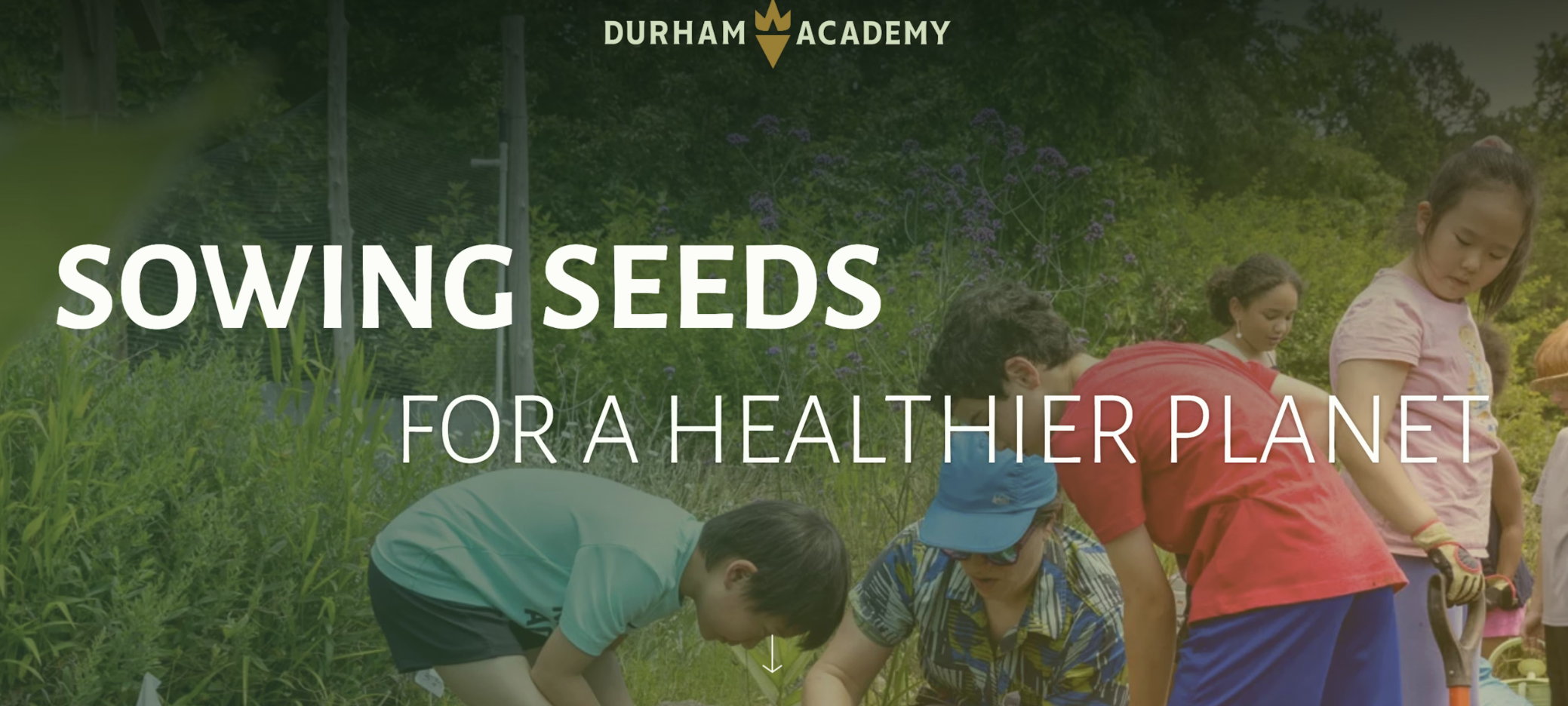
Durham Academy in Durham, North Carolina, is a Pre-K–12 independent school dedicated to preparing students to lead moral, happy, and productive lives through deep learning, character development, and a strong sense of community. What sets Durham apart is how intentionally it aligns that mission with environmental responsibility.
The school has articulated a definition of sustainability that is both clear and authentic: Sustainability at Durham Academy means fulfilling the school’s mission while safeguarding the natural environment for future generations. That commitment isn’t symbolic. The Board of Trustees has elevated sustainability to a top-level strategic priority and formally endorsed four-year goals developed in collaboration with student and adult leaders.
Durham’s formal Sustainability Action Plan provides the structure to turn vision into action. It is organized around three clear goals:
Educate for Sustainability
Reduce Greenhouse Gases
Increase Biodiversity
This clarity matters. It enables focus, accountability, and measurable progress.
The school is working to embed Education for Sustainability (EfS) from the earliest years onward:
Preschool students explore composting and natural cycles.
Third graders dive into a “Power of Pollinators” unit that connects ecology, systems thinking, and stewardship.
Middle School advisory integrates sustainability into character and community conversations.
An Upper School Student Government Sustainability Committee runs a compost program, organizes biodiversity workdays, provides support for events, and develops connections to sustainability in a variety of curricular and extracurricular programs.
In every division and subject area, sustainability is treated not as an add-on, but as part of how the school teaches and operates.
Leading the charge is Sustainability Coordinator Tina Bessias, whose leadership continues to translate ambition into tangible outcomes across curriculum, campus, and culture. When asked what other schools could take from the DA sustainability journey, she says:
"Don't go looking for a playbook in this new field. Be an opportunist instead! Try to create a sustainability presence in events that are already happening in your school. Seek input from the students, faculty members, and administrators who are trying to do something innovative and intriguing. Try to collaborate with them in ways that promote their goals and raise awareness of sustainability. And perhaps most importantly, keep it upbeat. In a field all too freighted with dread, your role is to offer hope. Make it silly sometimes, and have fun!
Schools looking for a model of strategic, whole-school sustainability would do well to explore Durham Academy’s Sustainability Action Plan. It’s a strong example of what becomes possible when governance, educators, and students pull in the same direction.
What Other Schools Can Learn
Durham Academy’s approach offers several insights for schools looking to move from sustainability intentions to sustained action.
Start with a clear definition.
Durham begins with a shared understanding of what sustainability means for the school: fulfilling its mission while safeguarding the natural environment for future generations. This clarity helps align decisions across leadership, teaching, and operations.
Make sustainability a leadership priority.
By elevating sustainability to a strategic priority endorsed by the Board of Trustees, the school ensures that environmental responsibility is embedded in long-term planning rather than dependent on individual champions alone.
Create a focused action plan.
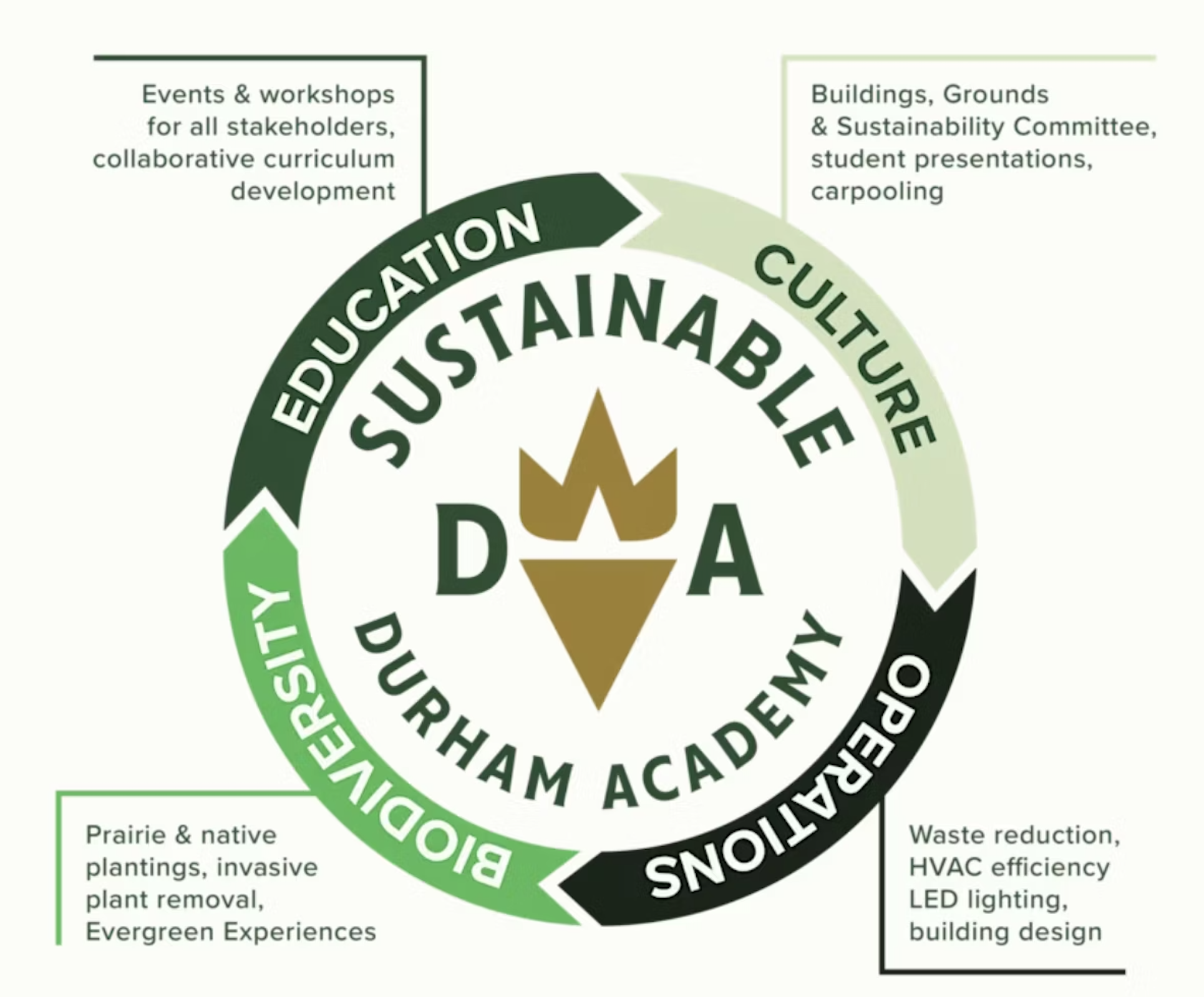
Durham’s Sustainability Action Plan is built around three clear goals—Education for Sustainability, Greenhouse Gas Reduction, and Biodiversity. Simple, well-defined goals make it easier for schools to coordinate efforts and track progress.
Embed sustainability across the student journey.
From preschool composting to student-led initiatives in the Upper School, Durham demonstrates how sustainability learning can evolve across grade levels and subjects.
Empower student leadership.
The Upper School Sustainability Committee shows how students can take meaningful ownership of initiatives—from composting programs to biodiversity projects and sustainability events.
Build on what already exists.
As Sustainability Coordinator Tina Bessias notes, schools don’t need a perfect blueprint to begin. Integrating sustainability into existing events, programs, and conversations can be one of the most effective ways to build momentum.